Snake Plant
Care BLUF:
Water needs: Low
Light needs: Medium to Bright Indirect Light
Pet toxicity: Toxic when ingested
Temperature preferences: 60°F–80°F (15°C–27°C)
Care Notes:
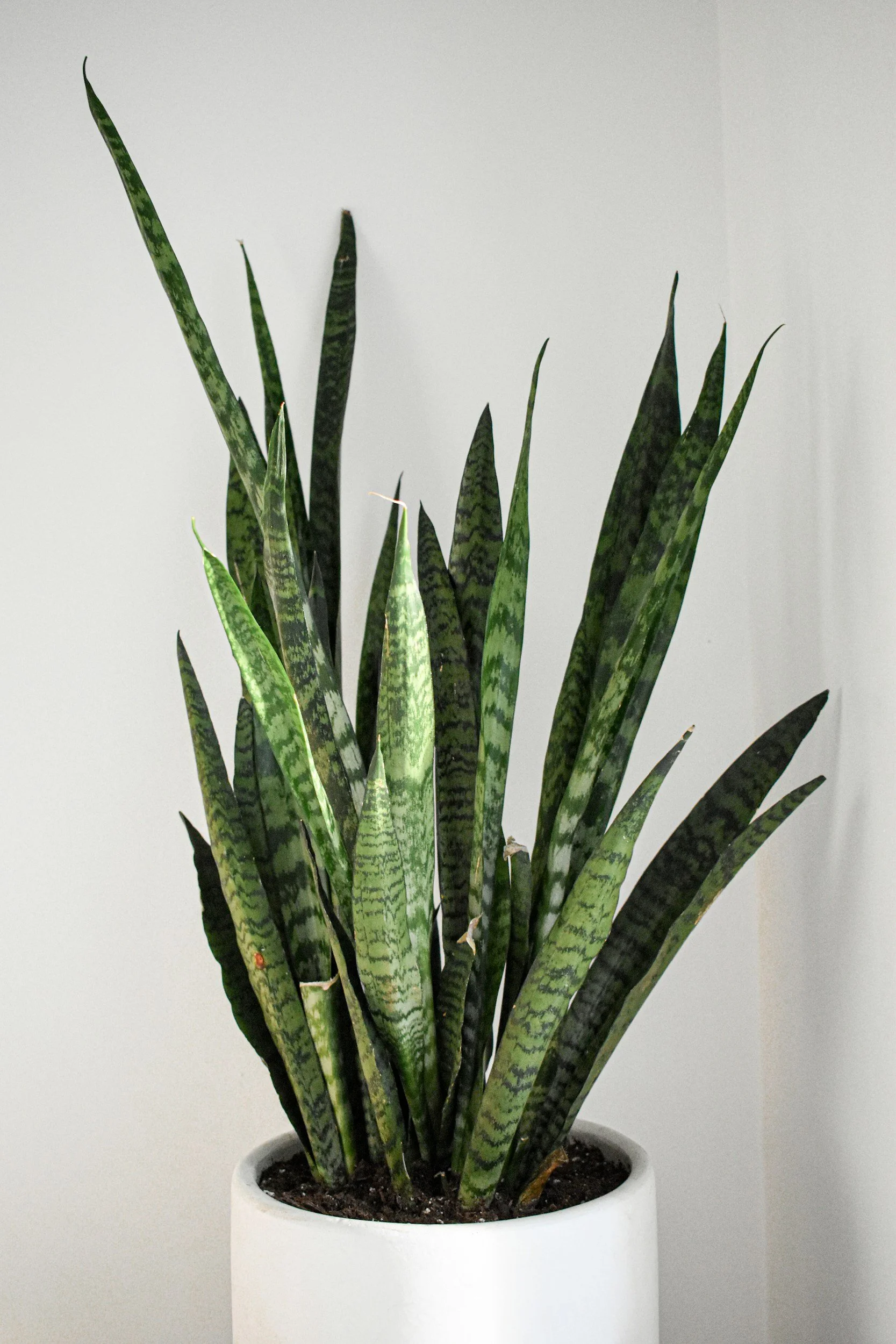
Snake plants are some of my all-time favorite plants. Besides their stunning, tall, thick, spear-like leaves, they’re incredibly beginner-friendly and adaptable. They’re low-light tolerant, forgiving if you forget a watering (been there), and are often praised for their air-purifying qualities which makes them great for offices, bedrooms, and minimalist spaces.
Snake plants thrive on neglect and prefer their soil to dry out completely between waterings. Overwatering is the most common issue I see. Pro tip: when in doubt, wait it out. These plants bounce back far better from underwatering than soggy soil.
They tolerate a wide range of lighting conditions, from lower light (key word: low, not none) to bright indirect light. Brighter light encourages stronger growth, but they’ll happily hang out in less-than-perfect lighting too.
Common Overwatering Symptoms:
Drooping leaves
Soft, mushy, yellowing leaves
Dark spots on leaves
Common Underwatering Symptoms:
Wrinkled, shriveled, or curling leaves
Thin, dry, crispy edges
Hard, dry soil
Bloom Saloon Pro-Tips:
Check soil moisture every week or two by sticking your finger about an inch into the soil near the pot’s edge. I like to set a bi-weekly reminder to check and a monthly reminder to water deeply and let excess water drain.
Homes in the Fredericksburg area can get dry in winter and humid in summer. Snake plants handle both well, just be extra mindful not to overwater during the humid months.
Types of Sansevieria at the Bloom Saloon:
Laurentii
Zeylanica
FAQ: Snake Plant Care
-
Snake plants should be watered only after the soil has dried out completely. For most homes, this is every 3–4 weeks.
-
Yes. Snake plants adapt well to low light, but grow faster and stronger in bright indirect light.
-
No. Snake plants are toxic to cats and dogs if ingested. Keep out of reach of pets.
-
Yellowing leaves are usually a sign of overwatering or poor drainage. Allow the soil to completely dry out before watering again.
A true statement philodendron with elongated leaves. Consistent care is key.